|

Planned Parenthood of North Texas Calls for Emergency Contraception As Standard of Care for Sexual Assault Survivors
DALLAS -- Planned Parenthood of North Texas (PPNT) has released the results of its survey of North Texas hospitals that provide treatment to survivors of sexual assault. The survey was designed to measure access to emergency contraception for survivors who come to emergency rooms for care.
The survey reveals how access to emergency contraception depends on which doctor is on call that day and his/her knowledge of emergency contraception and willingness to share that knowledge with the patient. The survey, which is the latest of hospitals in Texas, was supported by a grant from the National Council of Jewish Women.
Key findings include:
- 74 percent of hospitals surveyed do provide survivors of sexual assault with information about emergency contraception.
- 44 percent of hospitals have a written policy that survivors of sexual assault must be provided information about emergency contraception.
- 33 percent of hospitals give out emergency contraception medication while the woman is in the emergency room.
- 15 percent of surveyed hospitals tell sexual assault survivors about emergency contraception only if the survivor asks.
- 11 percent of hospitals do not give sexual assault survivors any information about emergency contraception, even if the survivor requests it.
"It is unconscionable for medical practitioners to unnecessarily place women who have been sexually assaulted at risk of the additional trauma of an unwanted pregnancy and, perhaps, of deciding whether or not to have an abortion," said Jim Roderick, president and CEO of PPNT. "These results underline the critical need for consistent standards among hospitals, standards that provide women with all their options and the care they need while they are in the emergency room."
Recommendations from PPNT include:
- The Texas Legislature pass legislation requiring Texas hospitals to provide information about emergency contraception and to dispense emergency contraception as requested to all survivors of sexual assault who go to an emergency room for treatment.
- Hospitals educate their emergency room staff about emergency contraception and its use in preventing unintended pregnancies so patients who have been sexually assaulted receive consistent and unbiased information.
Rep. Senfronia Thompson (D-Houston) filed H.B. that would require hospital emergency rooms to inform sexual assault survivors about emergency contraception and to provide it in the emergency room as requested. Sen. Jeff Wentworth (R-San Antonio) sponsored the companion bill in the Senate. In February , Thompson filed H.B. , which would allow pharmacists who have completed a training program on emergency contraception to dispense it without a prescription.
Emergency contraception is a Food and Drug Administration (FDA)-approved method of birth control that can be taken up to 72 hours after unprotected intercourse to help prevent an unintended pregnancy. It is more effective the sooner after unprotected intercourse it is taken and can reduce the risk of pregnancy by 75 percent to 85 percent. The most common side effects are nausea and vomiting, and even women who cannot regularly use oral contraceptives may safely use emergency contraception.
Emergency contraception should not be confused with Mifeprex (also known as RU-486), the medical abortion pill. Emergency contraception cannot terminate an existing pregnancy and will not harm an existing pregnancy.
PPNT surveyed 54 hospitals in North Texas that serve women who have been sexually assaulted. PPNT staff measured hospital policy through phone inquires with emergency room staff.
Off the Bookshelf
Legal Nurse Consulting: Principles and Practice, second edition
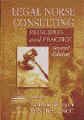 Edited by Patricia W. Iyer, MSN, RN, LNCC Edited by Patricia W. Iyer, MSN, RN, LNCC
CRC Press and American Association of Legal Nurse Consultants;
This authoritative tome, which weighs in at a hefty 1,132 pages, is the earnest and impressive work of 99 contributors and nine editors. Authorship of this immensely comprehensive text draws from the leading experts in the field, including several forensic nurses. It delivers the most current thought without being pedantic and provides an exhaustive road map to one of the most complex, challenging and pertinent fields of nursing. Firmly parked at the intersection of medicine and law, this body of work is highly recommended for forensic nurses who endeavor to understand the entire continuum of the medico-legal process. It is a must-read for clinicians who need to understand the basic tenets and wish to enter legal nurse consulting or individuals who wish to further master the intricacies and subtleties of their profession. Of particular value to forensic nurses is the chapter titled, "Evaluating Forensic Cases," penned by Doug Davis, BSN, RN, DABFN; Diana Faugno, BSN, RN, CPN, FAAFS; Joseph R. McMahon III, JD; and Patricia Steed King, RN. They cover crucial aspects of criminal law, criminal procedure, evidence, investigation, the LNC's role in handling cases of child abuse, elder abuse, domestic violence, sexual assault, driving under the influence and death investigations. The section on evidence is quite good, and is a springboard for the forensic nurse's ongoing pursuit of knowledge.
Date Book
July
7-8 The 15th annual "Selected Topics in Child Abuse" course will be held at Colby College in Waterville, Maine. Contact Jesse Davis at or log on to: www.colby.edu/spec.prog/cme.html
14-18 The "Introduction to Bloodstain Pattern Analysis" course will be held at the University of North Texas in Denton, Texas. Contact Edward Hueske at .
August
4-8 "Conducting Forensic Evidentiary Interviews With Children Exposed to Child Abuse, Family or Community Violence," sponsored by the Chadwick Center for Children and Families, Children's Hospital, will be held at the Westin Horton Plaza in San Diego. Contact Linda Wilson at , ext. .

03/22/
Pediatric SANE Training Offered in August in San Diego County
03/15/
Monmouth University Offers Sexual Assault Nurse Examiner (SANE) Program
03/14/
Minnesota Department of Health Releases New Data Estimating that 30,000 Minnesota Women Experienced Intimate Partner Violence in
02/21/
American College of Surgeons National Trauma Bank Now Surpasses 1 Million Record Mark
Psychiatric Disorders Greatly Underdiagnosed in Hospital Emergency Departments
02/17/
Emergency Nursing Leaders Tackle ED Overcrowding, Patient-Safety Challenges at National Summit
02/14/
Emergency Department Violence Not Uncommon; Majority of Emergency Physicians Report Experiencing at Least One Violent Act a Year
More News
|