Starting a SANE/SART Program: Opportunities, Challenges and Rewards
By Karen S. Hayward, PhD, RN, SANE-A, with Christine Collaer-Muzzo, MA
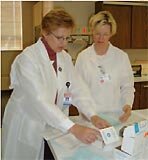 Within the burgeoning field of forensic nursing, the number of Sexual Assault Nurse Examiner (SANE) programs, coupled with Sexual Assault Response Teams (SARTs), continues to increase across the United States. With more than 350 SANE programs nationwide, outcome evidence presented in current literature continues to demonstrate the effectiveness of SANE/SART programs in the holistic response to victims of violence.1-3 Within the burgeoning field of forensic nursing, the number of Sexual Assault Nurse Examiner (SANE) programs, coupled with Sexual Assault Response Teams (SARTs), continues to increase across the United States. With more than 350 SANE programs nationwide, outcome evidence presented in current literature continues to demonstrate the effectiveness of SANE/SART programs in the holistic response to victims of violence.1-3
The start-up of a SANE/SART program takes commitment, collaboration, tenacity and resiliency. An initial step in the process is an assessment of community resources and current infrastructure, which can support the implementation of the SANE/SART response. In our case, the opportunity to partner with an academic institution (Idaho State University, ISU) located in Pocatello, Idaho; with the community-based organization providing advocacy and other services to individuals, families, and rural communities experiencing violence (Family Services Alliance of Southeast Idaho, FSA); and with the primary regional referral center in the area (Portneuf Medical Center, PMC), was recognized and pursued.
Portneuf Medical Center is the primary referral facility located in Pocatello, Idaho, in Bannock County, surrounded by rural communities in Bingham, Oneida, Power, Caribou and Bear Lake counties of region five in southeast Idaho. The decision was made to house the SANE/SART program in the emergency room of PMC, given recognized regional referral status of the facility, and availability of service provision 24 hours a day.
Relationships had been developed among the primary partners (ISU, FSA and PMC) through previous grant programs, academic service learning projects, and clinical rotation sites for ISU students. Leaders were identified from the various organizations and agencies in the area that were critical to the success of SANE/SART implementation, some of which had agreed to serve on an ad hoc committee of the Bannock County Domestic Violence and Sexual Assault Task Force.
Following an extensive review of the literature, specific goals and objectives were identified for the development of the SANE/SART program based on the national model introduced by Dr. Linda Ledray.4 A commitment was made by ad hoc committee members to plan for regional SANE/SART implementation, developed initially in Bannock County with a long-term goal to reach out to surrounding rural communities for the delivery of services.
Building relationships and support for the SANE/SART program required meeting with physician groups and members of the developing SART team. Meetings were scheduled with local law enforcement, forensic lab staff, court personnel, judges, prosecutors, and emergency room and social service staff at Portneuf Medical Center. Certification of a nurse as a sexual assault nurse examiner for adult and adolescent victims (SANE-A) through the International Association of Forensic Nurses (IAFN), was determined to be critical to establish and support credibility and quality of the developing program. As the program was being developed, Dr. Karen Hayward became certified as a SANE-A, enrolling in a course in a neighboring state, as training was not available in Idaho. Resistance from physicians in having a nurse complete the entire forensic exam and follow-up, was countered by consistent and dependable availability of the SANE-A, Hayward started in an assistant role with the medical doctor, and moved to an independent role in the collection of forensic evidence and care of the victim within a SANE/SART model. Hayward had been working as a staff nurse at PMC for more than 15 years as a component of faculty practice as professor of nursing at Idaho State University, and was willing to take calls as a SANE-A on a volunteer basis to establish the program.
The key to success at this point was to remain tenacious, believing in the initial goals and objectives established as paramount to increasing the standard of care for victims of violence, particularly sexual assault.
Much of the initial work as a SANE-A was done on a volunteer basis, particularly on-call and weekend hours as it was recognized early on by Hayward that in order to build the foundation for a SANE/SART program without initial funding, commitment and collaboration would be essential for success. Advocacy services have been provided under the direction of Christine Collaer-Muzzo through FSA, a critical component of the SANE/SART team. Providing education of hospital staff on the role of the advocate, and working closely with Social Services within PMC, facilitated the presence of the advocate in the ER in a team approach to care of the victim.
The hope was to build an initial structure and functioning of the SANE/SART program to support external funding. Family Services Alliance had advocacy services in place in the seven-county area of southeast Idaho supported through federal funding, and the decision was made to offer SANE-A services in surrounding rural communities as law enforcement and hospitals with limited resources began requesting SANE intervention, with an interest in the development of local SARTs. By offering SANE-A services in the rural communities working with local law enforcement and advocates through FSA, relationships were developed for building support for SANE/SART regional response with a long-term goal of local SANE/SART services in each county of region five in southeast Idaho. Policy and protocol development has been ongoing using the SANE/SART national model, with adaptation to each rural community based on the needs and resources in each area.
There are many challenges to starting a SANE/SART program. These include funding, educational needs involving recruitment and retention of nurses willing to commit to certification and practice as a SANE-A, and time to write specific policy and protocol, a plan for evaluation, and ongoing development. In our case, given the expanding regional structure of the SANE/SART program and support of leaders, law enforcement, hospital personnel and others through hard work, volunteerism and commitment to the process, we began to pursue external funding.
Critical to the success of obtaining funding would be the partnership established between PMC, FSA and ISU, with strong linkages with local Domestic Violence and Sexual Assault Task Force units. Partnerships and linkages within the communities continue to provide opportunities to share resources, expertise, and workload, supporting success.
A search was conducted using Community of Science (COS), through the Idaho State University library to identify potential funding sources for continued expansion and development of the SANE/SART regional program. A potential funding source was identified through the U.S. Department of Health and Human Services, Health Services and Resource Administration, Rural Health Outreach Program. A grant was written and submitted and on the initial effort, approved but not funded. A request was made for reviewer comments and building upon feedback received, the grant was developed further and resubmitted the following year, with notification of award received in May in the amount of $452,622 over a three-year grant period.
This grant will provide the opportunity to further develop the regional SANE/SART program in southeast Idaho, with an end objective to have a minimum of two certified SANE-As in each rural community of southeast Idaho. The first SANE/SART course in Idaho, based on guidelines and standards established through the IAFN was held on the ISU campus in January . This course will be offered in the state every year through the grant period, with efforts to support the development of SANE/SART programs across Idaho.
Recruitment of new SANE-As requires an emphasis on careful and diligent selection. Taking calls, responding to cases at all hours, follow-up through the court system, and participation in development, implementation and evaluation takes resiliency, tenacity, and a commitment to forensic nursing. The goal of a nurse cannot be to become a certified SANE-A without a full understanding of the role. Inherent to the SANE-A role is a commitment to the process, a desire to support the goals and objectives of the developing SANE/SART program, involvement in expanding partnerships through collaboration, and active participation in the evaluation of outcomes. These obligations need to be discussed thoroughly with nurses interested in the SANEA role to prevent potential attrition after training, as the demands are unique and require an ongoing commitment to a team process.
The effective partnership of ISU, FSA, and PMC, with continued linkages to community-based agencies, organizations and providers has enhanced the support and successful bid for external funding through other sources. Federal and foundation monies have been received from other sources as a partnership effort, to increase the delivery of advocacy services in rural southeast Idaho through FSA, expand family support services, build cultural awareness and resources, and support efforts to encourage arrest in domestic violence cases. These rewards of hard work and commitment will further enhance opportunities for forensic nurses to expand and design their role for improving the standard of care for victims of violence.
We remain resilient through the varied challenges faced in setting up a new SANE/SART program including the above stated issues, and open to new ideas, as the development and implementation of a successful SANE/SART program is ongoing. Federal funding received through the U.S. Department of Health and Human Services has enhanced our ability to work toward the initial goals and objectives established, as well as provide statewide SANE/SART support.
Funding agencies often require a plan for sustainability after the funding cycle is over. Sustainability is built on a strong mission and vision supported by relationships, commitment, and ongoing collaboration. In our case, the sustainability plan involves local to regional development of SANE/SART as described herein, with ongoing mentorship of nurses through PMC as the referral facility in the region. Collaboration with ISU will support ongoing continuing education for forensic nurses. A plan for evaluation from the start of program development, including research, will provide the evidence needed of the impact of the SANE/SART programs.
As with other SANE/SART programs nationwide, we have experienced an increase in reporting, improved collaboration with law enforcement, shortened examination time, better evidence collection, more complete and comprehensive documentation, and increased prosecution of sexual assault cases.5 Increased awareness across the region has resulted in participation and concern of community members, and has provided opportunities for the expanded role of the forensic nurse in southeast Idaho, including involvement in domestic violence cases, child custody, and batterer intervention and evaluation.
The greatest factor to the success of obtaining external funding is taking the time to build a foundation for success. This requires a commitment to build relationships, partnering among agencies and organizations, ongoing review of the literature, development of an evaluation plan, and a belief that success can be reached in this very important, essential effort. A valuable resource — one’s time, must be given in some way, knowing that volunteerism is a component of professionalism, and rewards us in many ways independent of a paycheck. Only through commitment, tenacity and resiliency as described herein can a program become a reality, improving the standard of care for victims of violence with enhanced outcomes.
As we plan for continued expansion of our SANE/SART program regionally, we face new challenges including nurse recruitment and retention, procurement of equipment and maintenance of new technology, technical support needs, and finding time for dissemination of findings. New linkages are being established to continue to build upon the foundation developed and supported through collaboration, volunteer efforts, and grant funding to keep the SANE/SART program sustainable and of high quality.
 |
Christine Collaer- Muzzo, MA, is advocate program director of Family Services Alliance of Southeast Idaho. |
 |
Karen S. Hayward, PhD, RN, SANE-A is a professor of nursing at Idaho State University. |

05/02/
Report Says Female Genital Cutting is Changing Over Time
04/25/
CDC Releases First National Violent Death Reporting System (NVDRS) Data
04/14/
Elder Abuse Prevention is Put In The Hands of the Elderly; Phones For Life Gives Seniors the Security of Knowing Help is Only a Phone Call Away
04/11/
Unchaperoned Examinations Risk Misconduct Allegations
03/22/
Pediatric SANE Training Offered in August in San Diego County
03/15/
Monmouth University Offers Sexual Assault Nurse Examiner (SANE) Program
03/14/
Minnesota Department of Health Releases New Data Estimating that 30,000 Minnesota Women Experienced Intimate Partner Violence in
More News
|