|

Department of Justice Spearheads Family Justice Center Initiative
“The President’s Initiative will provide communities with the resources designed to co-locate coordinated services to domestic violence victims into one facility.”
—Diane M. Stuart
WASHINGTON, D.C. — Attorney General John Ashcroft announced that the U.S. Department of Justice (DoJ) will lead a $20 million program to develop comprehensive domestic violence victim service and support centers in 12 communities across the country. The unprecedented pilot program, the President’s Family Justice Center Initiative, will make a victim’s search for help and justice easier by bringing professionals who provide an array of necessary services together under one roof.
“Domestic violence is unacceptable, and this Administration is determined to end the vicious cycle of violence,” said Ashcroft. “Our efforts across the federal government have made it possible for tens of thousands of women and their families to renew their hope, reclaim their dignity, change their lives and protect their children.”
The President’s Family Justice Center Initiative will provide comprehensive services for domestic violence victims at one location, including medical care, counseling, law enforcement assistance, social services, employment assistance, and housing assistance.
The DoJ will award grants to 12 communities nationwide to develop Family Justice Centers. Communities will be encouraged to look to the family justice centers in pioneered in San Diego and Indianapolis for the development and creation of their own centers.
“The President’s Initiative will provide communities with the resources designed to colocate coordinated services to domestic violence victims into one facility,” said Diane M. Stuart, director of the Office on Violence Against Women. “The services provided by the Family Justice Centers will help victims pursue safe and healthy lives.”
Family Justice Centers are designed to bring together advocates from non-profit, nongovernmental domestic violence victim services organizations, law enforcement officers, prosecutors, probation officers, governmental victim assistants, forensic medical professionals, civil legal attorneys, chaplains and representatives from community-based organizations into one centralized location.
Involvement of the faith community is integral to the Family Justice Center Initiative, as well as to the President’s overall strategy to end domestic violence. The Justice Department, Department of Health and Human Services, and the Defense Department are coordinating their efforts to ensure that faith communities nationwide get the training and tools necessary to help domestic violence victims in their communities.
“The faith-based component of the Family Justice Center Initiative is critical to its overall success,” said Office of Justice Programs Assistant Attorney General Deborah J.
Daniels. “Faith-based institutions are often the first place a domestic violence victim turns to for support and guidance.”
Eligible applicants include large urban cities, small-medium urban cities, rural counties, suburban/urban counties, tribal lands and military base communities. The initiative will include two phases: planning, assessment and development, and implementation. The President’s Family Justice Center Initiative Fiscal Year solicitation is available on the OJP Web site at www.ojp.usdoj.gov/fundopps.htm.
The Office of Justice Programs provides federal leadership in developing the nation’s capacity to prevent and control crime, administer justice, and assist victims.
Datebook
JANUARY
11-13
Forensic Medical Investigation Course
Maui, Hawaii
Contact: Mary Dudley, MD, (316) 383- or
19-23
Adult/Adolescent Basic SANE Training Course
Warren, Mich.
Contact: Renae Diegel,
26-30
Conference on Child and Family Maltreatment
Town and Country Resort & Convention Center, San Diego
Contact: Linda Wilson, , ext.
26-30
Medicolegal Death Investigator Training Course
Saint Louis University School of Medicine, Division of Forensic Pathology
St. Louis, Mo.
Contact: Mary Fran Ernst or Julie Howe,
FEBRUARY
16-21
American Academy of Forensic Science 56th annual meeting
Adam’s Mark Hotel, Dallas
www.aafs.org
MARCH
1-4
Forensic Focus
Hyatt New Brunswick, New Brunswick, N.J.
Contact: Marsha Henderson,
www.forensicfocus.net
8-12
Bloodstain Pattern Analysis Workshop
Metropolitan Police Institute, Miami
Contact: Toby L. Wolson,
13-15
Forensic Medical Investigation Course
Kansas City, Kan.
Contact: Mary Dudley, MD,
(316) 383- or
15-20
Forensic Anthropology for Law Enforcement and Death Investigators
Missouri Western University, Saint Joseph, Mo.
Contact: Ed Waldrip,
17-21
The Assessment and Evaluation of the Adult Sexual Assault Survivor Introductory Course
Rutgers University, Newark, N.J.
Contact: or http://nursing.rutgers.edu
Off The Bookshelf
 Death Investigator’s Handbook Death Investigator’s Handbook
By Louis N. Eliopulos,
Paladin Press, ; 961pages
This epic text, expanded and updated for , assembled by a senior investigator with the Naval Criminal Investigative Service and a former chief forensic medical investigator is literally the last word on death investigation principles and practices. This thoroughly exhaustive text presents — in outline form more often than not — a comprehensive guide to criminal investigation of every kind of suspicious death imaginable. It offers both a fascinating, long-term read from cover to cover for the professional or student who has the time to plow through the enormous body of content, as well as a quick read for the time-pressured professional who needs a quick fact or a refresher on a particular aspect of investigation. Easy to read yet authoritative, this handbook goes the distance for casual and serious reader alike.
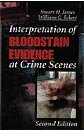 Interpretation of Bloodstain Evidence at Crime Scenes, Second Edition Interpretation of Bloodstain Evidence at Crime Scenes, Second Edition
By Stuart H. James and William G. Eckert
CRC Press, ; 324 pages
Devotees of the study of bloodstains sometimes lament a lack of appreciation of their discipline, but James and Eckert have created a precise body of work that appeals to students new to the field as well as to forensic nurses and other professionals that need a quick introduction to this fascinating science. As bloodstain interpretation has matured into a respected branch of forensic science, the need to understand what blood spatter can tell investigators about a crime has grown in importance. An updated chapter on the medico-legal aspects of bloodshed at crime scenes recognizes that the discipline has taken on greater importance because of its role in many high-profile criminal cases. The updated case studies and improved photographs provide valuable application of the text’s content within real-life scenarios.
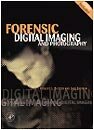 Forensic Digital Imaging and Photography Forensic Digital Imaging and Photography
By Herbert L. Blitzer and Jack Jacobia,
Academic Press, ; 256 pages
Forensic nurses and members of law enforcement with a slightly more advanced photographic ability will be interested in this text that can show them how to move from film to digital and still preserve the integrity of the forensic photographic process. This nuts-and-bolts guide can be dry to readers who are not particularly technology-savvy, but the chapters on legal considerations and images in the courtroom merit further study. The text does an admirable job of addressing the forensic community’s concerns about illicit manipulation of images, and coaches readers about how to take digital images that will stand up in court. As expected, the text includes content on CD-ROM.
Reader Feedback
By Tina Brooks
Q: What suggestions can you offer someone seeking additional funding for a SANE program?
A: “I might suggest that this person approach their district attorney or the local police agencies for some financial support. They might also contact the local hospital emergency care centers and inquire if there may be some monies available from them. Finally, the federal and state governments are making monies available for these types of projects. Contact your senators and representatives.”
Joseph T. Dominick, RN, LFD, CMI-3
Chief Deputy Coroner
Allegheny County, Pa.
A: “I would ask first, what kind of SANE program ... hospital-based or community-based? Either could be funded through charity fundraising. Most nonprofit hospitals have auxiliaries which raise funds and donate to a hospital program; nonprofit boards/foundations which raise money for hospital based projects (i.e., hospice, pediatric and women’s issues, etc.); and apply for state, federal and private foundation grant monies; they would have to research those options and set meetings to apply. Community-based programs could possibly apply to the United Way, the local women’s center, the county/city commissioners, or organize local fundraisers as well as apply for state, federal and private foundation grant monies. The grant information requires research but is usually easily accessible with some effort.”
Katherine Scholl, RN, MN, SANE-A, CMI-3, CHS-3, DABFN, FACFE
Clinical Forensic Nurse Examiner/Educator
Wuesthoff Health System
Brevard County, Fla.
A: “Some SANE programs reportedly have had success obtaining funds from local, community and civic organizations: Junior League, Lions Clubs, Kiwanis, Rotary Clubs, etc. Another opportunity might be with a hospital foundation, hospital auxiliary or grant funding available through the County Medical Society.”
Valerie Sievers, MSN, RN, CNS, CEN, SANE-A
Clinical Forensic Nurse Specialist
SANE Coordinator, Colorado Coalition Against Sexual Assault
Denver, Colo
Mailbag
Wearing Her Heart on Her Sleeve
To the Editor:
On Oct. 5, , I participated in the 19th annual Army 10-Miler Road Race in Washington, D.C. with my friends, Dave and Elaine, and 18,000 other runners. Race-day weather was perfect. It was a beautiful sunny day with temperatures reaching into the 60s. I thought it was suitable T-shirt weather so I donned my forensic nurse T-shirt (the black and white one). My only pre-race apprehension was that my favorite running shoes had worn out. I had purchased three new pair but none were really comfortable. Blisters would be inevitable.
The race start and finish lines were at the Pentagon. Right from the start, several runners took notice of my T-shirt. It caught the attention of other runners who would comment, “Wow! Cool shirt!” One runner asked, “Have you ever heard of forensic botany?” As I passed the Kennedy Center, I remember referring a runner to the forensic nurse Web site for more information. Someone else asked whose fingerprint was on the back of the shirt.
As the race ticked on and the distance seemed to stretch farther between each mile marker, it was refreshing to hear other exhausted runners in the pack call out remarks like, “Hey, haven’t I see you on CSI?” and “I hope I don’t see you at work tomorrow!” and “I hope I don’t need you at the end of the race!”
As I crossed the finish line, I felt grateful to the men and women of the United States Army for their honorable service to our country and also for sponsoring this wonderful event. I felt proud to be a participant and thankful that I didn’t have to put my forensic nursing skills to work that day. I’m also glad that I wore my forensic nurse T-shirt. It gave me the opportunity to talk to people who seemed curious and interested about our profession. Actually, I was so busy talking about forensic nursing that I had forgotten all about the blisters on the bottom of my feet!
Nancy B. Cabelus,
RN, MSN, DABFN
Newington, Conn.

12/10/
Illinois Facility Disciplined for Failure to Ensure Staff Knows How to Respond to an Allegation of Sexual Abuse
12/09/
Emergency Nurses Association, Stryker Partner to Recognize Nation’s Top Emergency Departments
11/29/
Author and Rape Counselor Advises How to Assist a Victim of Sexual Assault
Wisconsin Reports Increase in Elder Abuse
11/17/
Two Illinois Long-Term Care Facilities Fined for Failing to Investigate, Prevent Alleged Sexual Abuse
11/07/
California Attorney General Bill Lockyer Announces Release of Six-Month Preliminary Crime Statistics for
Ohio Attorney General Jim Petro Announces Inmate DNA Samples Linked to 202 Unsolved Crimes, Including Cincinnati Serial Rapes
More News
|